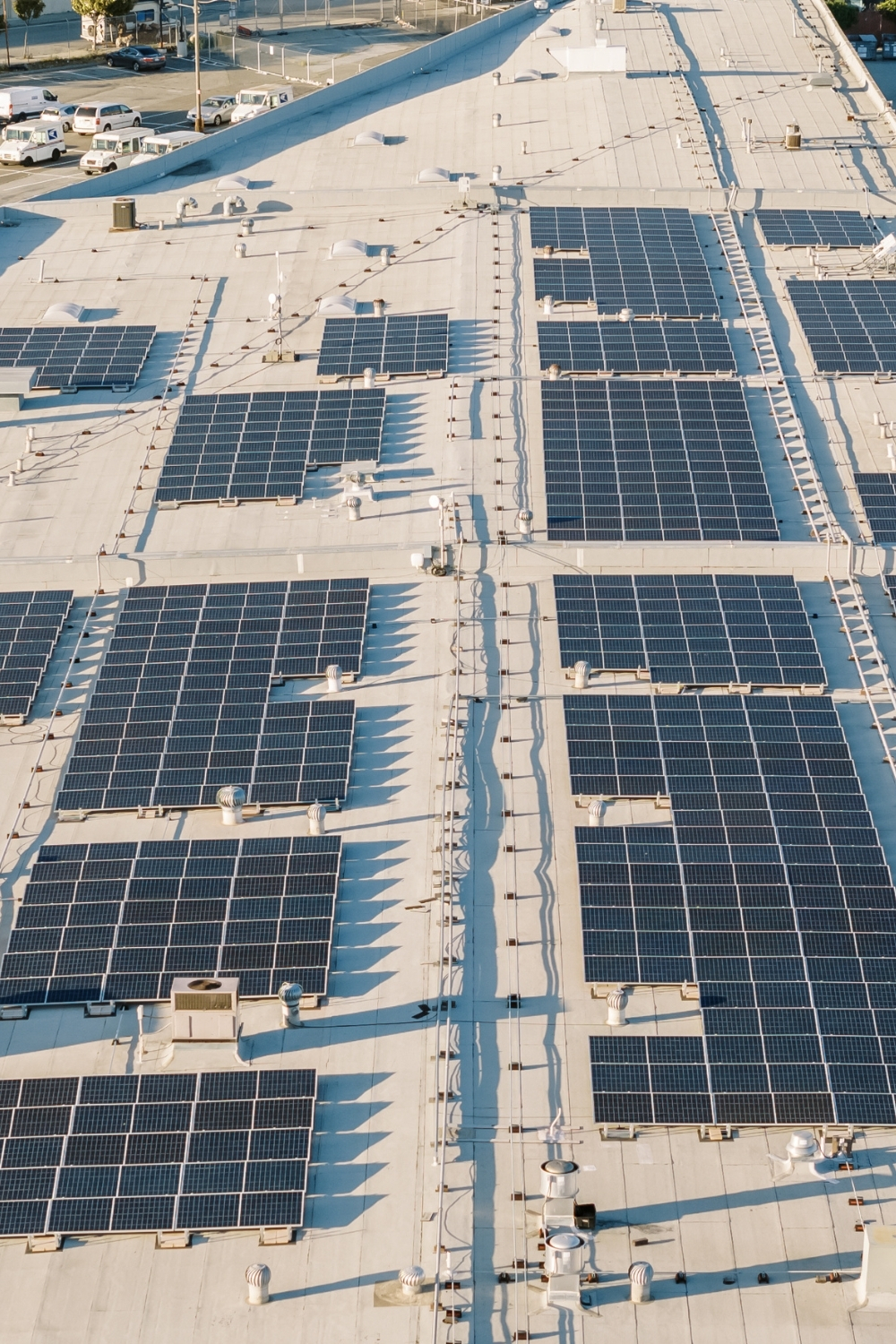
Commercial property owners face familiar pressures: utility costs continue to rise, ESG expectations are intensifying, and tenants are seeking ways to stabilize their expenses. At the same time, millions of square feet of rooftop space across U.S. shopping centers, industrial buildings, and mixed-use properties remain underused.
Community solar changes this equation. By converting idle commercial and industrial rooftops into energy-producing assets, property owners unlock long-term rental income, tenants benefit from discounted power, and neighborhoods gain broader access to clean energy.
King Energy is at the forefront of this transformation. As the nationwide leader in commercial and industrial solar, we design, finance, and operate community solar systems that work for property owners, tenants, and neighborhoods alike. In this blog, we’ll explain what community solar is, why it makes financial and operational sense, how the regulatory and billing frameworks work, and why King Energy is the long-term partner built to deliver these outcomes at scale.
What Is Community Solar for Commercial Properties?
Community solar is a structure where a single solar installation serves multiple subscribers. On a commercial property, this means tenants subscribe to solar credits and see lower utility bills. Any unused credits can be allocated to local residents or small businesses.
For the property owner, the arrangement is straightforward. The solar operator leases the rooftop or parking area, pays monthly rent, and manages the solar system from installation through maintenance. The owner receives predictable income, the tenants receive discounted energy, and the community benefits from expanded access to renewables.
It’s a simple formula: new rent stream for owners, lower costs for tenants, stronger ESG outcomes for portfolios.
Why Community Solar Makes Financial Sense for C&I
Stable, Long-Term Rental Income
The biggest advantage for owners is predictable rent. Community solar projects are typically structured as 20- to 25-year leases. Rent payments flow directly into NOI and, through standard cap rate math, increase long-term property value. For owners focused on asset appreciation, this is a straightforward way to improve valuations.
Tangible Tenant Value
Tenants benefit directly from lower energy costs. Instead of paying the utility’s full rate, they receive bill credits from the community solar program that reduce their monthly expenses. For retailers, restaurants, or service providers operating on tight margins, these savings are meaningful.
For owners, tenant savings translate into higher retention rates and fewer leasing headaches. When tenants feel the property is lowering their costs, renewals become easier.
A Hedge Against Rising Energy Prices
Commercial electricity prices have increased nearly 10% in the past year, averaging 14.15¢ per kWh in July 2025. Community solar provides tenants with a built-in hedge against this volatility. That stability directly strengthens the property’s rent roll, making it easier for owners to keep NOI predictable even as utilities climb.
Market Momentum and Timing
The U.S. community solar market has already reached 7.87 gigawatts of capacity across 44 states and D.C. That’s not an abstract number—it means this model has been proven across thousands of commercial rooftops.
And the demand is accelerating. The Department of Energy has set a goal of powering 5 million households by 2025. To meet that target, operators are actively seeking new rooftops to host systems for property owners, creating a time-sensitive opportunity to secure favorable lease agreements.
ESG and Investor Expectations
For many portfolios, sustainability performance is no longer optional. Investors are asking for measurable ESG data, and tenants increasingly prefer properties that demonstrate environmental responsibility. Community solar creates audit-ready reporting on carbon reductions and clean energy production, allowing owners to meet these expectations without taking on new capital projects.
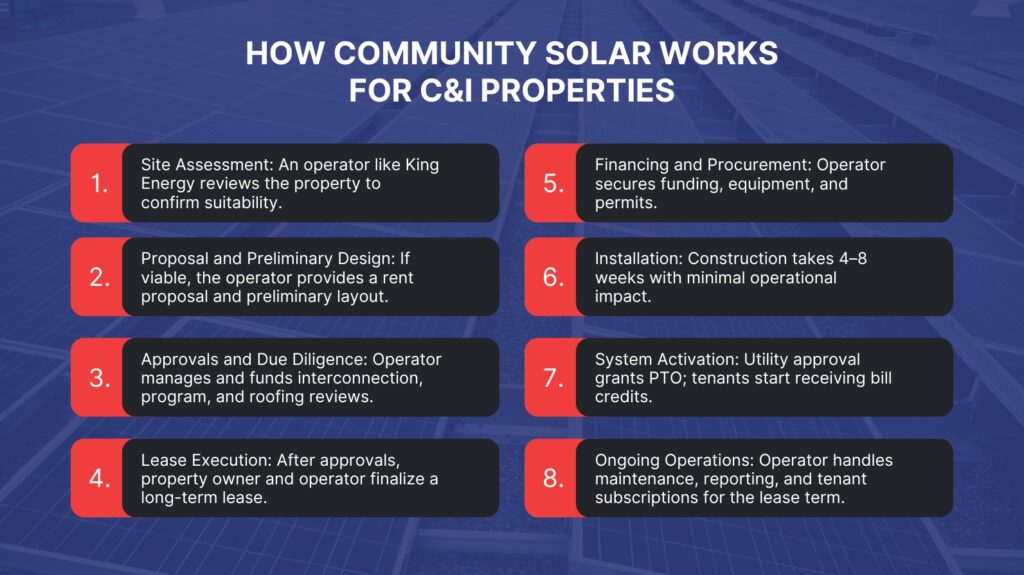
How Community Solar Works Step by Step
- Site Assessment
An operator like King Energy reviews the property using satellite imagery, roof condition data, and utility information to confirm suitability. - Proposal and Preliminary Design
If viable, the operator provides a rent proposal and preliminary solar layout. - Approvals and Due Diligence
Utility interconnection applications, state program submissions, and roofing reviews are completed at the operator’s expense. - Lease Execution
Once approvals are in place, the property owner and operator finalize a long-term lease agreement. - Financing and Procurement
The operator secures financing, orders equipment, and obtains local permits. - Installation
Construction typically takes 4–8 weeks, with minimal impact on daily operations. - System Activation
After the utility review, the system receives Permission to Operate, and tenants begin receiving bill credits. - Ongoing Operations and Reporting
The operator monitors and maintains the system, provides reporting, and manages tenant subscriptions for the duration of the lease.
For the owner, the process is designed to be hands-off. King Energy manages all development, installation, and long-term operations.
Policy and Regulatory Landscape
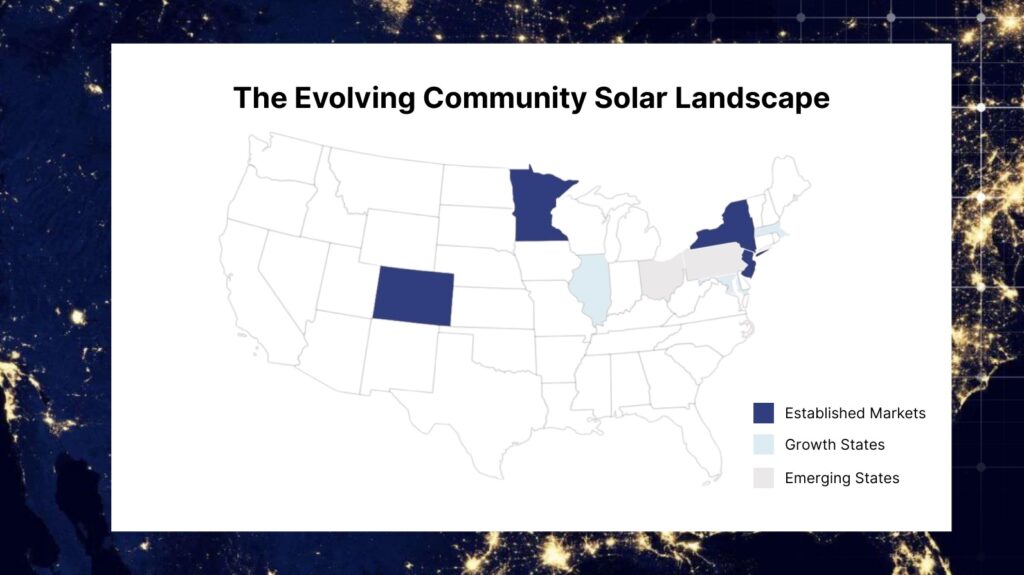
Community solar programs are expanding across the U.S.
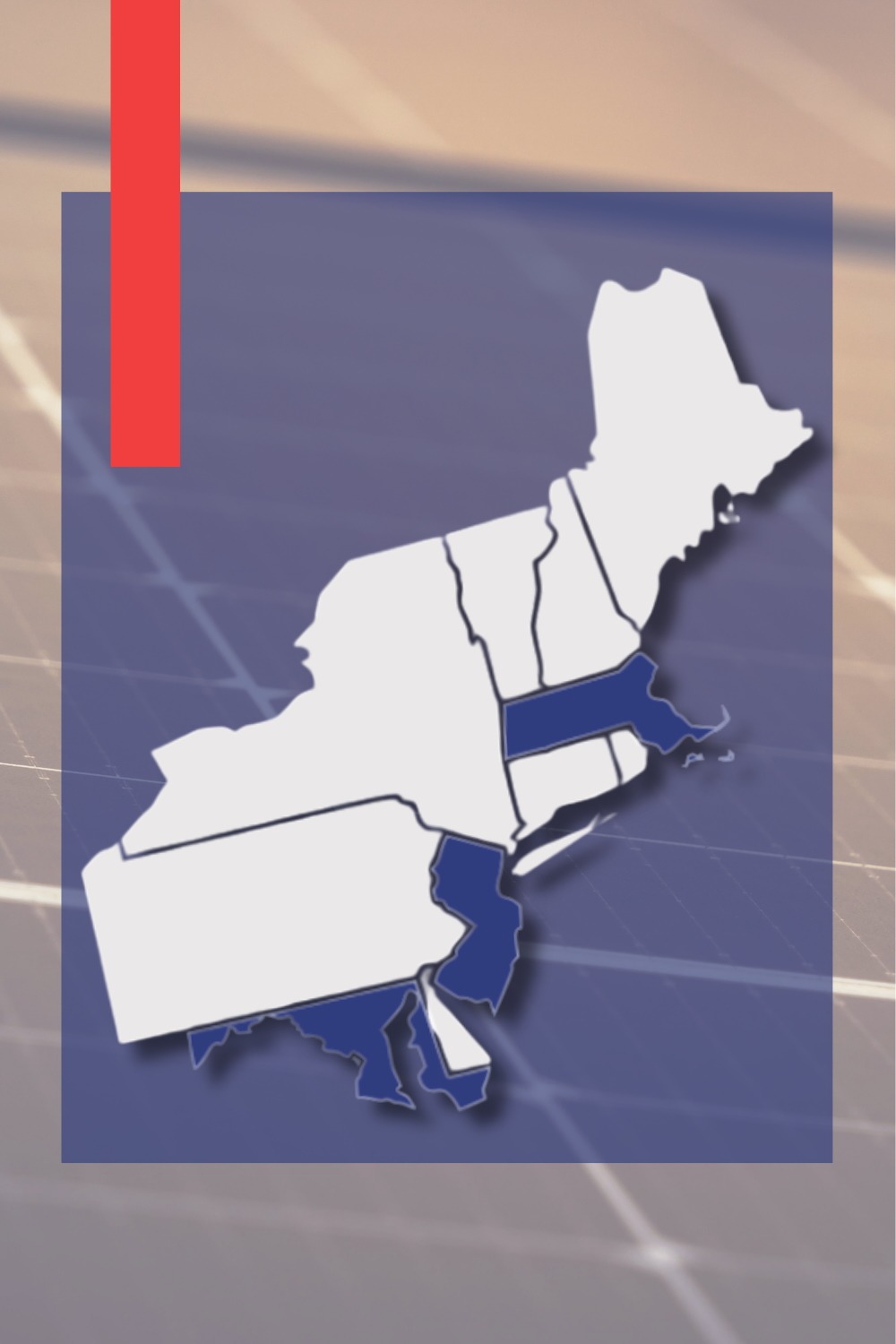
- Established Markets: New York, New Jersey, Colorado, and Minnesota have mature programs with strong adoption.
- Growth States: Illinois, Maryland, and Massachusetts continue to add significant capacity.
- Emerging States: Additional legislation is in motion in Pennsylvania, Ohio, and other states, creating new opportunities for CRE owners.
Why does this matter for property owners? Because policy dictates project economics. In strong community solar markets, demand for rooftops is high, which increases the value of the rent agreements available to owners. Partnering with an experienced operator ensures owners capture these benefits without navigating the policy details themselves.
The Billing Challenge—and the Solution
Multi-tenant properties have historically struggled to adopt solar because of billing complexity. Different tenants use different amounts of power, often under shared meters, making it difficult to distribute savings fairly.
King Energy addresses this challenge with OneBill™, an enterprise-grade platform built specifically for commercial properties. OneBill™ consolidates utility charges and solar savings into a single, transparent bill. Tenants see exactly how much they saved, while owners avoid administrative complexity.
For CRE portfolios, this is the difference between solar being “too complicated” and solar becoming a scalable revenue strategy.
Environmental and Community Benefits
Community solar creates additional value beyond NOI and tenant retention:
- Carbon Reduction: A 1 MW rooftop system offsets more than 1,000 tons of CO₂ annually, equivalent to planting 16,000 trees.
- Community Impact: Excess capacity benefits local residents and small businesses, strengthening community ties.
- Market Positioning: Properties hosting community solar stand out to national retailers seeking ESG-aligned leasing opportunities.
These outcomes help owners not only meet ESG benchmarks but also market properties more effectively in competitive leasing environments.
Why Partner with King Energy
King Energy is built specifically for commercial property owners:
- $0 Upfront Cost: We finance, install, own, and operate systems at no cost to the owner.
- Enterprise-Grade Software: OneBill™ ensures accurate, transparent billing for tenants.
- Nationwide Scale: 200+ systems installed, adding more than $110 million in property value since 2021.
- Long-Term Partnership: We manage each system for 25+ years, providing reliable performance and ongoing reporting.
For owners, this means a partner that makes community solar make sense—financially, operationally, and strategically.
Conclusion
Community solar is no longer a pilot program or a niche experiment. It is a proven model that generates long-term rent, lowers tenant costs, and strengthens ESG performance for commercial properties across the U.S.
For property owners, the importance is clear: unused rooftops can either remain idle or become a source of durable NOI and market differentiation. With King Energy’s nationwide expertise and purpose-built technology, the path forward is simple, low-friction, and built for long-term success.
Contact King Energy
Explore a community solar strategy for your properties. Contact King Energy today to request a site review and proposal.